Grassland Restoration
Project at a glance
Area of focus
This project was delivered by Glorious Cotswold Grasslands (GCG), a programme set up by the Cotswolds National Landscape in 2019 to provide advice and practical assistance with grassland restoration in the Cotswolds.
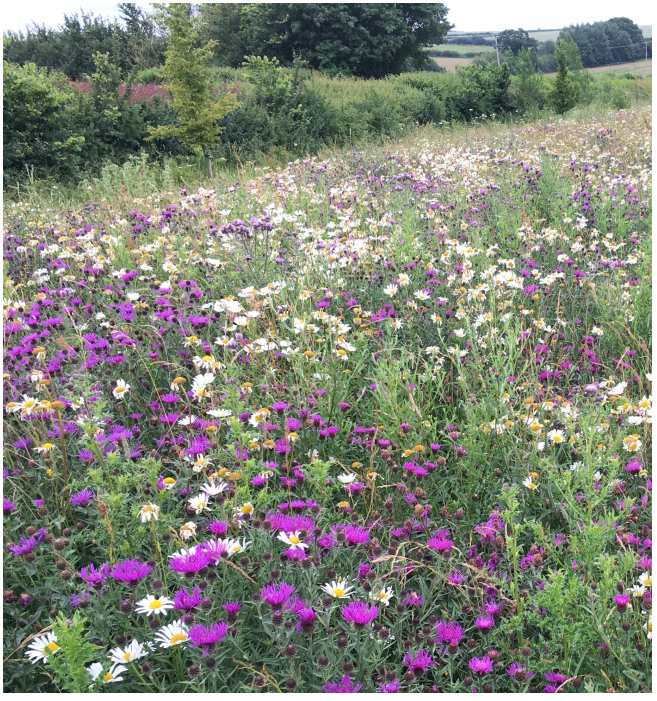
The restoration of species-rich wildflower grasslands has many benefits: increasing plant and invertebrate biodiversity; supporting animals higher up the food chain such as voles and bats, and birds like the red-listed skylark and raptors including barn owl and kestrel. Species-rich grasslands also provide many ecosystem services such as filtering agricultural run-off into watercourses, slowing the flow of floodwater, and storing carbon. There are also significant health & wellbeing benefits to people using the wildflower grasslands as well as historical and cultural reasons for restoration.
Objectives
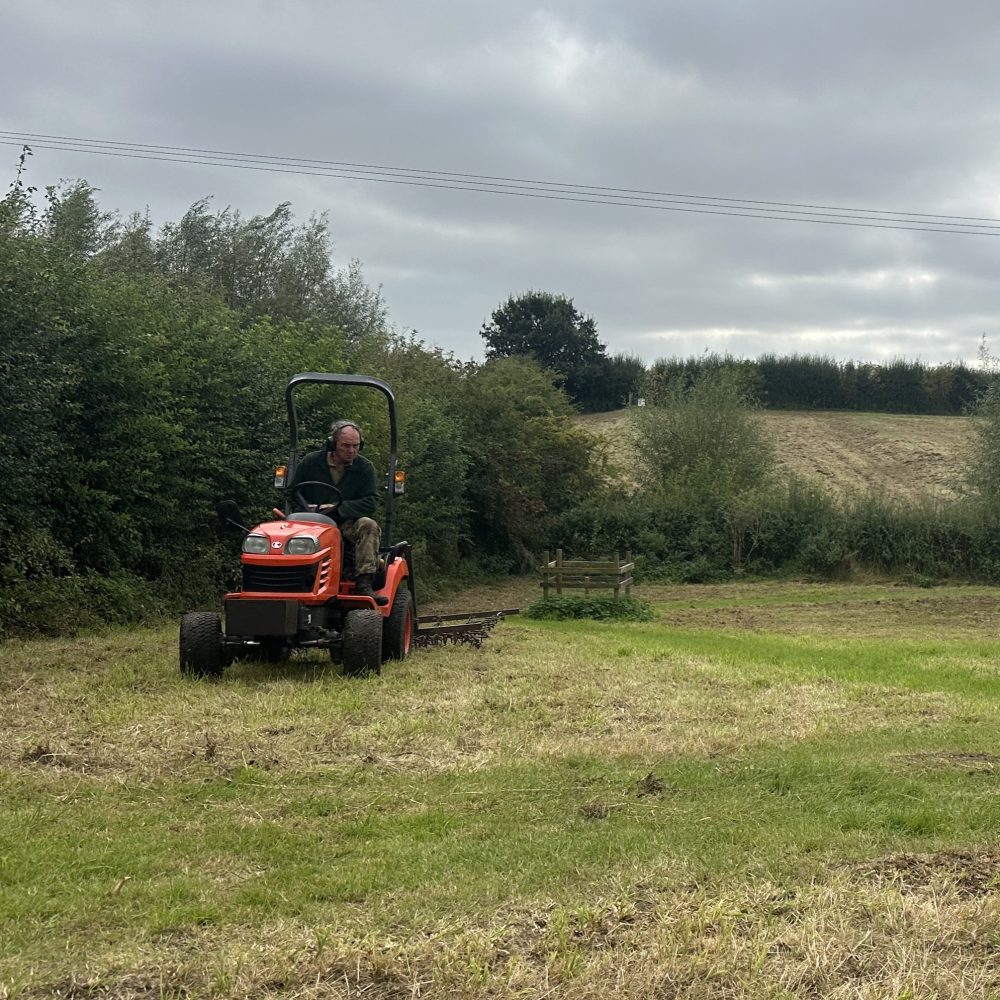
The aim of the project was to restore species-rich wildflower grasslands throughout the Evenlode catchment. This could be through the provision of advice, botanical surveys, management of existing sites, or the restoration and creation of new sites. GCG owns two brush seed harvesters which it uses to harvest seed from species-rich donor meadows. This seed is then used to enhance recipient sites which have similar soil type, aspect and dampness characteristics.
Outcomes
>23 ha grassland restored by overseeding
>150 volunteer hours contributed
The project collected brush-harvested seed from donor sites in the Evenlode catchment and used it to restore grassland by overseeding >23 ha.
It also funded four days of habitat management at three sites containing remnants of very species-rich unimproved calcareous grassland that were beginning to scrub over. The GCG volunteer team worked to remove a proportion of the scrub on each of these sites to open up with wildflower grassland whilst maintaining a mosaic of habitats also suitable for invertebrates, reptiles and nesting birds.
Project highlights
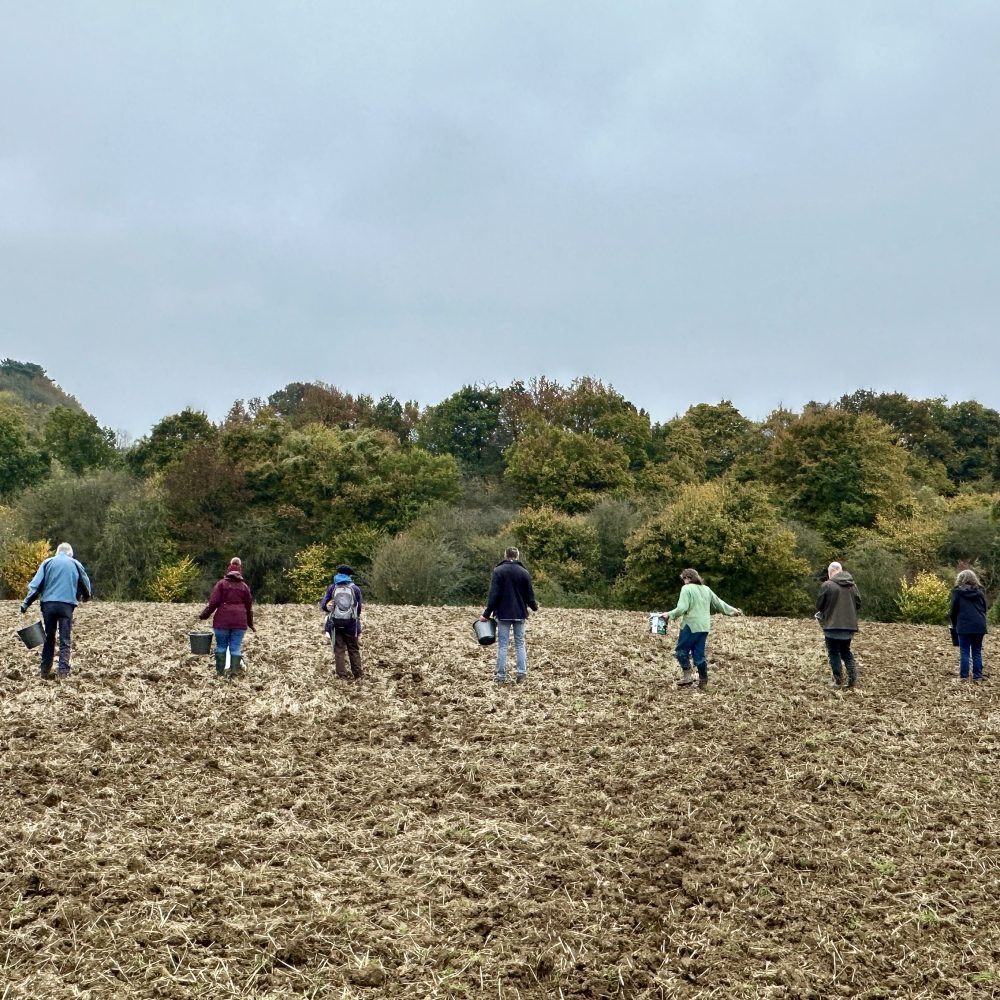
A local botanist purchased an old arable field just outside Stonesfield and decided to revert it to calcareous grassland by seeding it with brush-harvested seed from a variety of local species-rich meadows. The seed was sown by a large group of local and GCG volunteers in autumn 2024.
Lessons learnt
- Finding sites was challenging.
- The hot dry weather in summer 2023 restricted our seed harvesting window and reduced the total amount we were able to harvest.
- It was sometimes tricky to find landowners suited to this funding source because it required 50% matched funding. At the time there were several other options which could fund closer to 100% of restoration costs available to many landowners.
Future plans
GCG will continue to monitor the restored sites through regular botanical surveys, and will continue restoring wildflower grasslands in the Evenlode catchment through other funding streams, such as the new GRH6 option in the Sustainable Farming Incentive.
Funding
Total cost: £56,000
Thames Water contribution: £30,000
Landowners’ contribution: £26,000