Cornwell River Restoration and Wetland Creation
Three fields on the Cornwell Estate were of low agricultural value with seasonal cattle grazing. The landowner, Alex Ward, approached the Evenlode Catchment Partnership to enhance the wetland habitat, but also address the poor water quality in the Chipping Norton Brook. The brook receives treated and untreated effluent from Chipping Norton Sewage Treatment Works, and in times of low flow in summer, most of the water comes from the works. Originally a deeply incised, straightened channel, our vision was to free the water, allowing it to move naturally within the landscape.
Objectives
To create natural river channels, provide room for the river to move and slow the flow to create wetland habitats.
Three different designs of wetland were constructed in autumn 2023 by diverting the Chipping Norton Brook.
Upper wetland
By excavating new channels and backwaters into the field the river took new routes. The natural river gravels have been exposed and have been fashioned into riffles and deeper water by the action of the water, freely moving within the area.

Middle wetland
New channels were created to push the water into the field but we simply removed the topsoil exposing the river gravels and clay subbase. The river is not constrained and has spread widely across the field.

Lower wetland
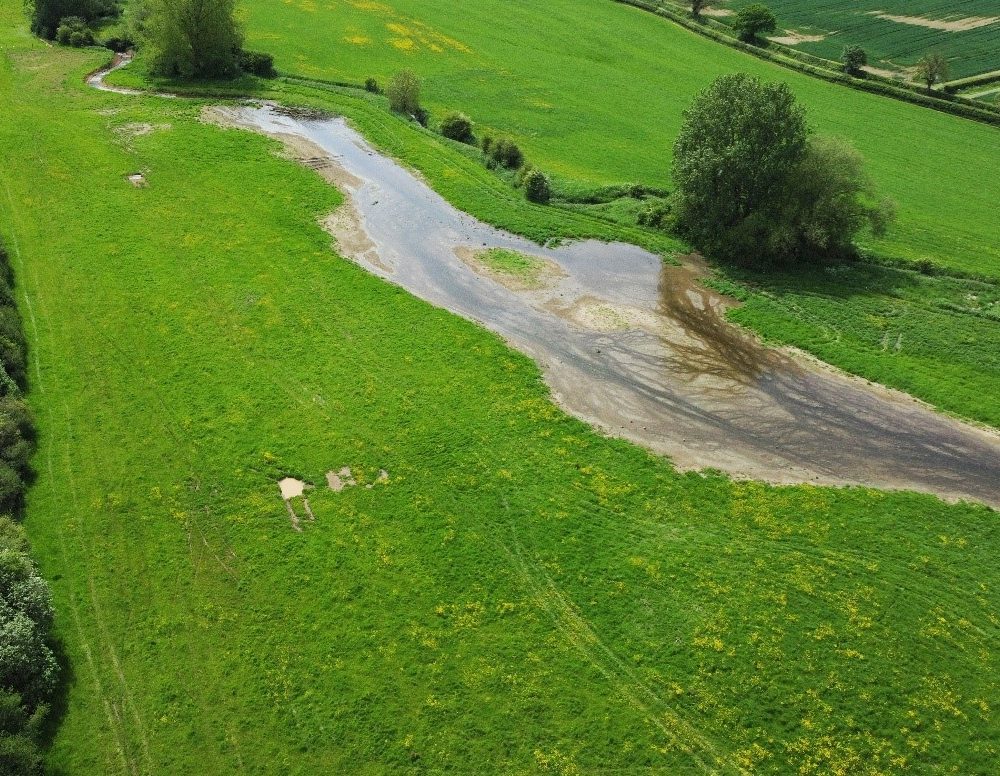
This wetland had the least intervention with channels created to push water into the field and re-join the brook lower down. The water is able to spread widely across the field which has a gentle gradient. The flow has slowed considerably and vast amounts of sediment have been deposited here already.
Fish spawning bed
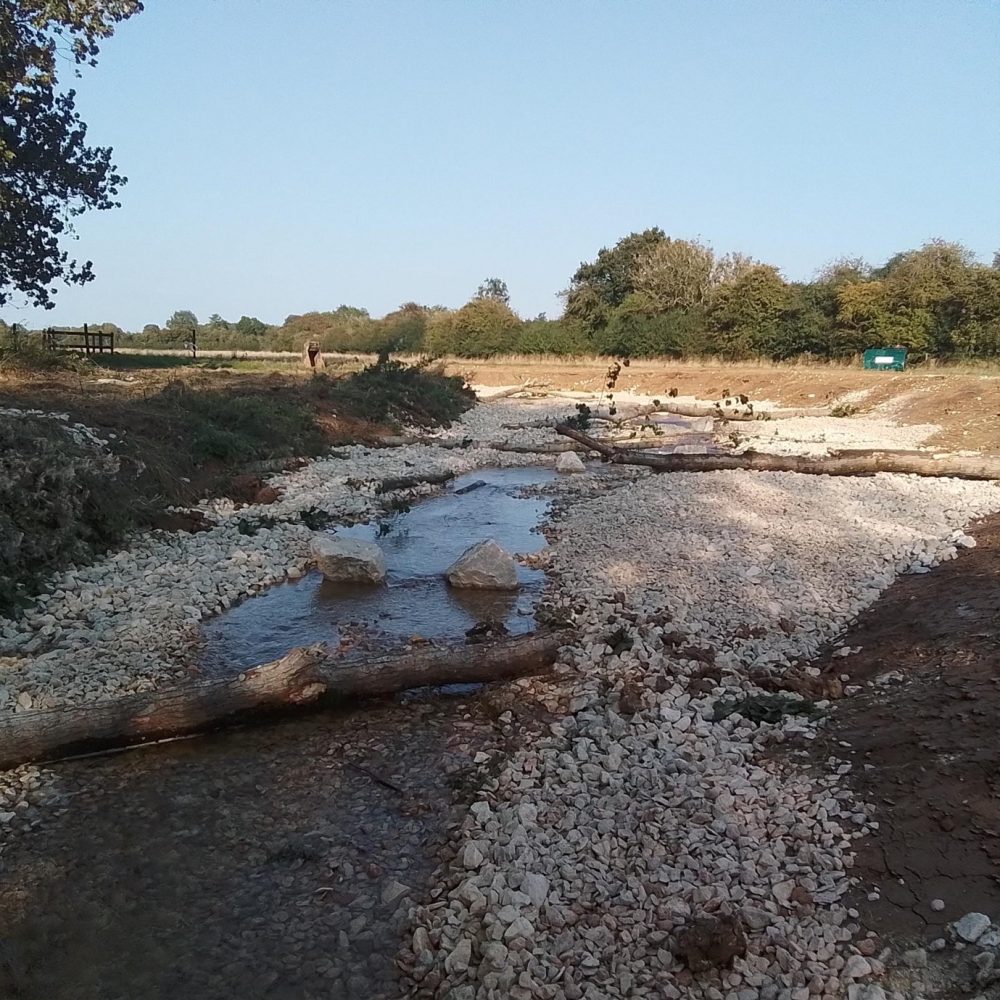
The return channel from the lower wetland runs fast over a clay bed. The Environment Agency suggested we construct a fish spawning bed with gravel, boulders and tree trunks to create slower flowing refuges in steps to allow fish to swim against the flow. The gravel bed is the favoured substrate for fish spawning and the faster flowing water keeps the gravel free of sediment.
Outcomes
4.5 ha wetland habitat created
3.03 ha species-rich grassland created
1 km length of river reconnected to its floodplain
14,500 aquatic plugs planted
175 native broadleaved tree whips planted
25,000 m3 flood water stored
Project highlights
Heron and egret arrived within days. Within months we had the first recorded sightings of green sandpiper and ringed plover. Unusual sightings were ruff, osprey and great egret.
The water entering the upper wetland is high in nutrients and very turbid. The water exiting the lower wetland is clear with a lower nutrient load, and this is even before many aquatic and marginal plants have established.
Lessons learnt
- Allow plenty of time and contingencies for disruption due to bad weather.
- Thames Water do not have records of all their services – there is a parallel pipe between Kingham and Chipping Norton.
- Water runs down the gravel filled trench for the foul water pipe in great quantity.
- Don’t stand still while walking in soft clay!
- Grant payments that only occur at the end of the project can put a small charity in financial jeopardy.
Future plans
Ideally, we would like to secure one or more PhD students to study these three different wetlands, looking at:
- How the channels change with time.
- How effective at nutrient reduction they are.
- How the ecology changes with time.
If you are interested in conducting this research, please contact ann@wildoxfordshire.org.uk
Funding
Total cost: £339,000
Thames Water contribution: £88,000
Public funding:
- Environment Agency, Water Environment Improvement Fund (WEIF) grant: £105,000
- Cotswolds National Landscape, Farming in Protected Landscapes (FiPL) grant: £146,000