Cornwell Wetland: The Birds are Singing with the River
Re-shaping Cornwell: a short history
The story of the Cornwell wetlands began in the 1960s, when the Swail (Rollright) Brook above Swailsford Bridge, a tributary of the Evenlode west of Chipping Norton, was drained by Cornwell Farms. The aim was to create productive farmland, but the experiment proved unsuccessful, famously ending in 1976 when a combine harvester became stuck in a peat bog!
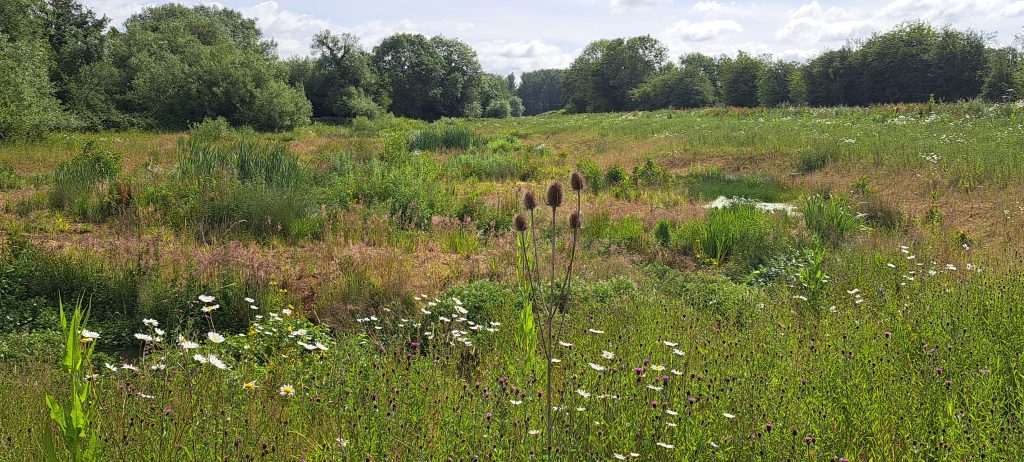
Around 30 years ago, as part of a Countryside Stewardship Scheme, this drainage was reversed. Drainage pipes were blocked, allowing water to once again spread across the surrounding land and reconnect with the Swail Brook below the Bridal path bridge. After an initial flurry of duck activity as worms surfaced, wildlife changes were gradual. Over the following years, tree felling opened up the site and it began to develop into a true marsh rather than a lake fringed by woodland. Lapwing soon arrived and bred on nearby fields for many years.
Around 2000, further flooding was created on the opposite side of Salford Road under an expanded stewardship scheme. While this increased habitat diversity and space for wildlife, the resulting wetland has more of a lake character than a marsh — something we hope to improve in future.
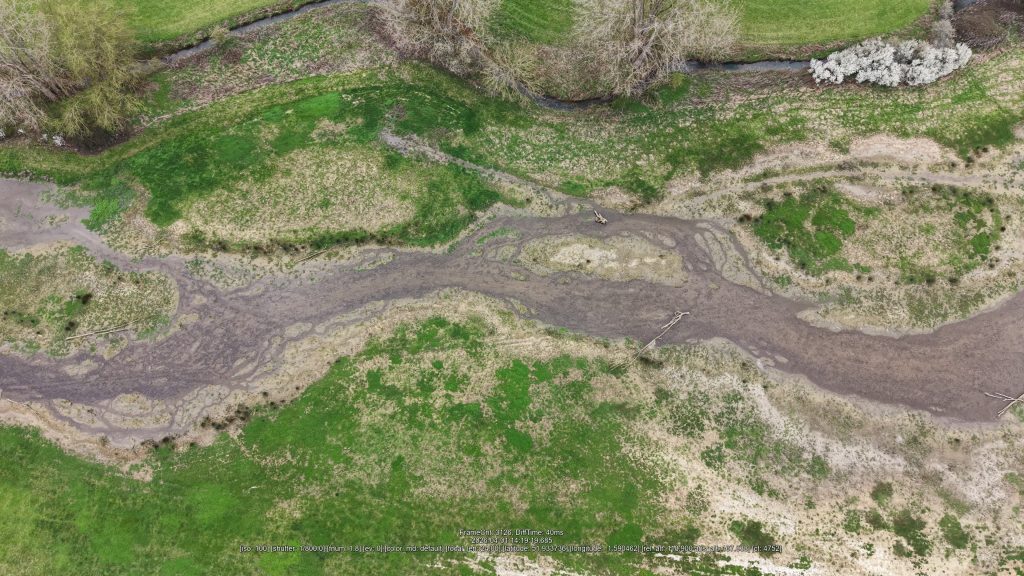
The next major step came in 2022, when around 30 hectares were leased to Environment Bank to create a Habitat Bank at Cornwell. This was followed by Wild Oxfordshire’s floodplain restoration project, funded by the Environment Agency, Thames Water and Cotswold National Landscape, reconnecting Chipping Norton Brook with its floodplain.
Looking ahead, the Evenlode Landscape Recovery programme, launched in 2026, will build on this work through further habitat creation, pond restoration and, subject to approval, additional floodplain reconnection projects that will help create a network of thriving wetlands across the Evenlode Valley.
Cornwell Marsh and Wetland – a very special place
Today, the Cornwell site is one of the most important areas of wetland in the north of Oxfordshire. It is a vital refuge for wetland bird species and an important breeding habitat for the Sedge Warbler and Reed Bunting. Cornwell has become a resting and feeding place for Spring and Autumn migrants like Marsh Harrier and Stonechat; and an important site for wintering wildfowl and waders like Teal, Jack Snipe and Common Snipe.
It is also important to note that many common wetland bird species resident in Britain occur here, such as Grey Heron, Little Egret, Grey Wagtail, Water Rail and Moorhen.
Our ‘star’ bird is without doubt the Green Sandpiper. Careful and regular WeBS counts have established that 0.5% of the British population visit here. Cornwell had a max of 5 individuals, putting it in the top 50 sites nationwide (Wetland Bird Survey (WeBS) data taken from Waterbirds in the UK 2024/25).
One of the most exciting aspects of the recent wetland creation project have been the rare and scarce species that have turned up. We have recorded juvenile Ruff, Greenshank, Little Ringed Plover, and Great White Egret.
Three UK raptor species breed here – Buzzard, Red Kite and Kestrel – whilst Merlin, Peregrine, Hobby and Barn Owl have been recorded hunting over the middle and Lower sections of the Wetland.
An impressive 99 species have been recorded here. The most magnificent of these was a trumpeting Common Crane. We eagerly await a visit from our 100th species!
Written by: Alex Ward, Andrew Wilkie, and Steve Akers