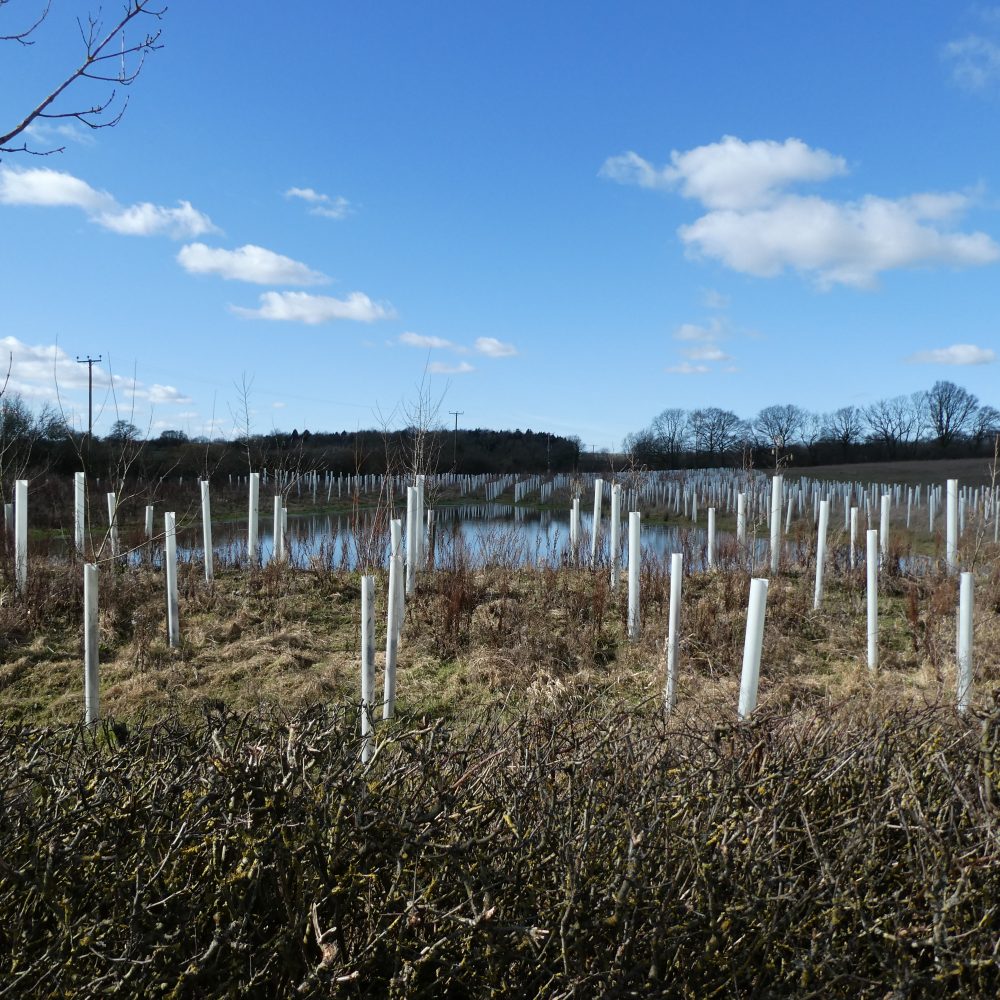
The Littlestock Brook
Natural Flood Management (NFM) was trialled on the Littlestock Brook in the Evenlode catchment during a 5-year project (2016-2021) aiming to reduce flood risk to the small rural community of Milton-under-Wychwood, and enhance the river environment. The Environment Agency collaborated with the Evenlode Catchment Partnership (ECP), Wild Oxfordshire, Bruern Estate and the local community to deliver agricultural land management changes and NFM measures.
Objectives
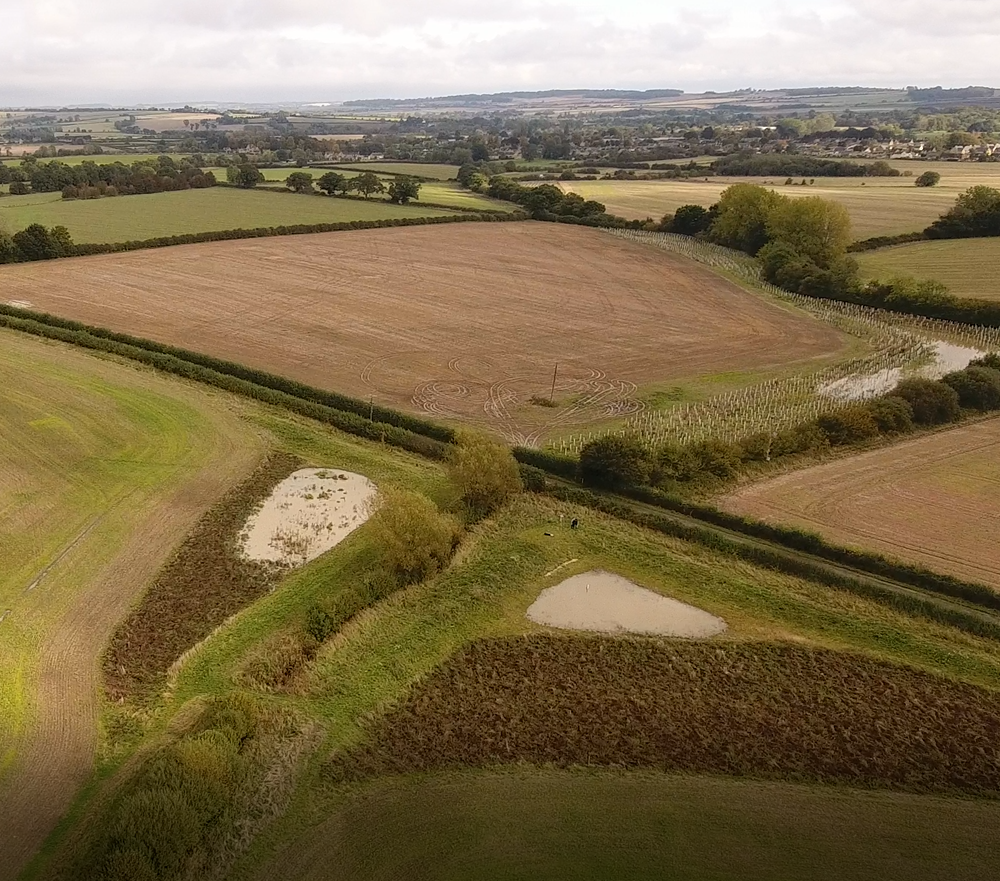
A range of NFM measures were implemented to reduce the flood risk to properties in Milton-under-Wychwood. This included constructing field corner bunds, leaky woody dams and de-culverting a watercourse.
To reduce diffuse phosphate and sediment entering Littlestock Brook and improve wildlife habitats, the project also created nutrient retention ponds and field margin sediment/nutrient traps, as well as planting riparian woodland.
The local community undertook tree planting and bank willow spiling in the parish field. Project interpretation boards will inform and educate visitors, encouraging them to engage by taking photos of the new ponds and landscape features to provide a visual record of their evolution.
Outcomes
15 field corner bunds created
27 leaky woody dams constructed
30,000 m3 temporary flood water storage
100 m watercourse de-culverted
14 nutrient retention ponds
1.1 km field margin sediment/nutrient traps
13 ha native broadleaved trees planted
14.4 ha riparian woodland planted
1 new footpath for recreation
Project highlights
The NFM project was selected as the winner of the Climate Resilient Places category in the Flood & Coast Excellence Awards 2021.
Watch a summary video of the project below.

Lessons learnt
As one of the first NFM projects in the Thames basin, it increases our understanding of the effectiveness of working with natural processes for flood risk management in a lowland agricultural landscape. Hydraulic modelling results show that the new measures reduce the severity of flooding to 12 properties for a range of flood events.
A comprehensive monitoring network of water levels, sediment and nutrient fluxes in heavy-rainfall events has generated detailed evidence on the effectiveness of these features for reducing flood risk and providing wider ecosystem services of improving water quality, habitat, and carbon storage.
Future plans
Critical to the project’s success has been the integrated delivery through the ECP and the local community to address multiple local environmental issues and to empower them to invest in their own catchment-based solutions.
The power of positive landowner experiences will be key to widening the application of NFM to a scale which can make our catchments climate resilient places.